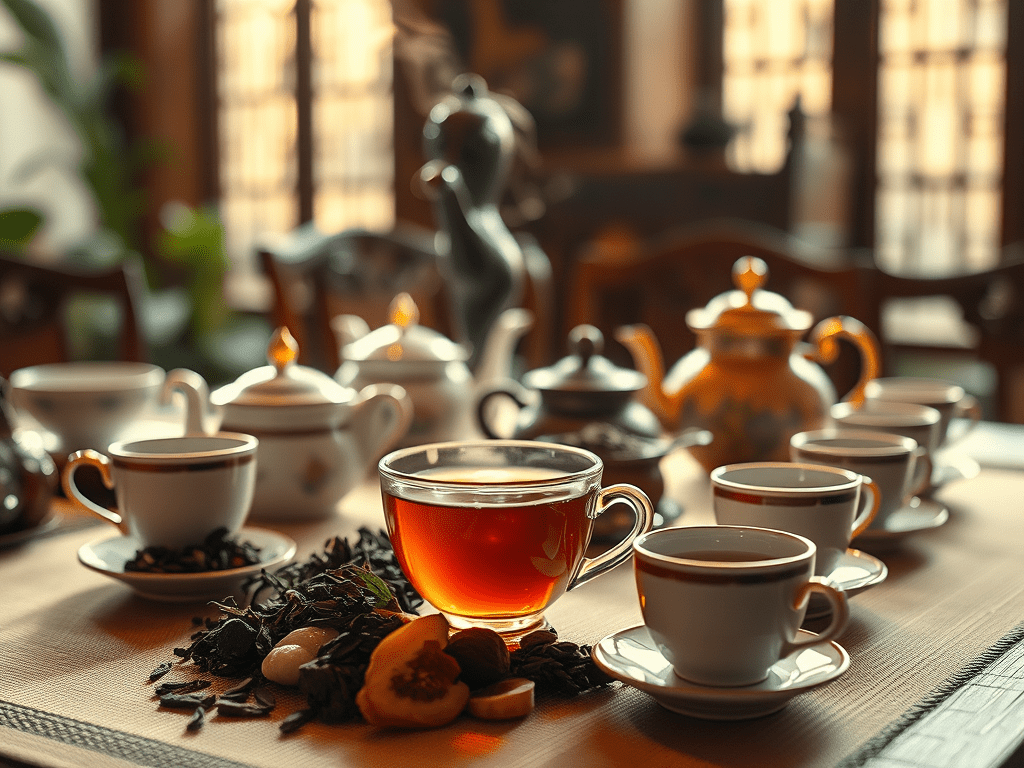
Have you ever wondered why there is something so soothing about taking a few minutes out of your day to make and enjoy a cup of tea? Whether you take it with milk, lemon, or even just plain – the ritual of making tea can be both calming and deeply satisfying. Making tea is an easy way to get that momentary pause in the middle of our busy lives, and it also has its own creative artistry in selecting and preparing teas. Taking the time to craft your cup of tea is well worth it. An ideal brewing temperature and steep time give you a delicious drink that preserves all those helpful compounds in tea! This blog post will explore tips on creating perfect cups of tea every time!
History of China and Russian Tea Houses
For centuries the art of making tea has been passed down through the generations between China and the people of Russia. The origins of the tea house, a meeting place to enjoy the calming beverage, are steeped in the traditions of those two countries. Making tea is an incredibly intricate process that involves selecting and blending teas from vast regions of different climates. Tea spanning from the highlands in the north to the desserts along the southern border are mingled to create unique flavor combinations for everyone’s taste. Consumers all over the globe have long sought after these exotic blends – purchasing them as far back as Russian Tsar Peter the Great, who was known for bringing back Chinese drinks and foodstuffs during his stint in Beijing in 1697. To this day, the love for Chinese and Russian teas can still be felt inside many historic tea houses, no matter their location worldwide.
The History of Chinese Tea Houses
Tea culture has been an integral part of Chinese culture for centuries. While the first record of tea consumption dates back to the Tang Dynasty (618-907 AD), it is believed that tea drinking was already commonplace. Tea houses began to appear in large numbers during the Ming dynasty (1368-1644 AD) when they became popular gathering places for conversation, literature, art, music, and politics.
Tea houses were also where people could find respite from everyday life in a tranquil setting. Today, many traditional tea houses still serve as gathering places for locals to discuss gossip and news events, often with small snacks such as dried fruits or nuts on the side. More modern versions of these establishments offer a wider range of food and drink options and entertainment.
The History of Russian Tea Houses
In Russia, tea drinking has been an important part of daily life since the 17th century when it was introduced by Russian merchants from Central Asia who had encountered the beverage while trading overseas. Tea quickly gained popularity among all classes of society. By 1785, it had become so popular that Empress Catherine II issued a decree establishing regulations for its sale and consumption across Russia’s empire.
Traditional Russian tea houses were similar to those found in China but with some unique features – they served hot meals such as blini (pancakes) or pelmeni (dumplings) alongside tea drinks like chai or borscht (a hearty soup made out of beets). These establishments typically featured cozy decor with wooden tables and chairs covered in brightly colored embroidered cloths known as rushnyk. Russian tea houses continue to exist today, although their role has shifted somewhat. Instead of gathering places for socializing, they now act more like cafes where people can grab quick meals or snacks before going about their day’s activities.
Cultural Significance
The art of making tea has longstanding roots in the history and lives of many cultures worldwide. Originating in China, preparing the beverage is steeped with deep meaning and cultural significance. From the silent simplicity of the Japanese tea ceremony to the exuberant spices used for Indian chai, preparing tea is an authentic expression of culture that evokes pleasure, helps us honor our heritage, and provides a magical bond between generations. Drinking a cup of tea thus moves beyond physical nourishment as it becomes a source of social cohesion within different cultures across the globe.
In both Chinese and Russian cultures, tea houses had great cultural significance; they served as places for people to relax and socialize and an important role in philosophical conversations about politics, literature, and philosophy. In China, it was common for scholars to gather at teahouses where they would debate topics such as Confucianism or Taoism; likewise, discussions about politics were commonplace in Russia. It was through these conversations that new ideas began to spread amongst different social classes – making them incredibly important for artistic creation as well as intellectual progress during both periods.
Modern Influence
In the modern world, the art of making tea has become increasingly influential in many people’s lives. From the ability to relax after a long day to the inviting aroma that can change the mood of the room, tea has been able to make its way into the homes and hearts of countless individuals. The exciting part about this modern influence is that it is not isolated to one culture or region; it has managed to cross oceans and borders, adapting and evolving as the years go by. Thus, the journey of tea making has gone from being a humble ritual to an integral part of today’s culture.
Today’s versions of traditional Chinese and Russian teahouses are still very popular – many across Europe offer traditional drinks such as shai borzhom (Russian black tea) or jasmine green teas from China alongside snacks like blinis (Russian pancakes) or dumplings from China. Teahouses have become modern spaces for people to come together over food, drinks, and music – creating spaces for connection amidst our increasingly connected yet disconnected world today!
Learn the Art of Preparing Tea
If you’re looking to make the perfect cup of tea, there’s much more to think about than just hot water and a teabag! With the right pre-brewing steps and ingredients, you can make a flavorful cup that can wake up your taste buds in no time. You must start by choosing your favorite blend of tea, either black (the traditional English Breakfast Tea) or green (such as Matcha or Sencha). Then, ensure your water is boiling to steep your tea leaves into the pot and maximize their flavor. Finally, when it’s ready, pour it into a warm mug, add milk (or honey) if desired, and enjoy that comforting aroma while sipping away! Morning cuppas have never tasted so perfect – let’s get brewing!
Warm It Up
Before you start your tea-making journey, don’t forget to warm up the teapot and cup. This is crucial to infuse all the delicious flavor into your tea. Think of it as a game – you wouldn’t want to roll the dice on an unheated board, right? It’s the same principle here! If you skip this part, be ready to miss out on optimal taste and face off with a midnight chill in your mug instead of a steaming cup of aromatic goodness. So take a few moments before starting – it’ll be worth it for an incomparably enriched tea experience!
Leave It for Two (Then Six) Minutes
If you like to get the tea-making process done quickly, you may miss out on that healthy, delicious flavor your tea was meant to have. Researchers from the University Of Northumbria School Of Life Sciences spent an impressive 180 hours exploring how to make the world’s perfect cup of tea with a teabag – and they’ve discovered something revolutionary! According to their findings, making a satisfying cup of joe takes only two minutes. That’s right – just drop the bag into your favorite beverage mug and resist temptation until that timer dings. Enjoying a cup of tea has never been easier – or tastier!
If you’re searching for that perfect cup of tea, the journey begins when you allow your leaves to steep. According to tea expert Angela Pryce, there’s a general guideline for tea lovers: keep it dark, and extend the length. The darker the leaves, the longer they should be left to steep. You’ll also want to add milk and let your cup sit for six minutes to reach an optimal 60-degree Celsius temperature before drinking. Following these instructions will unlock deep flavor profiles, unlocking tea’s full potential – just in time for afternoon crunchtime!
Avoid Water That’s Too Hot
When it comes to a perfectly brewed tea, choosing the right water temperature is just as important as picking the type of tea or even how long you steep it — and this is especially true if you’re making tea from a loose-leaf! While no one can blame you for wanting a piping hot cuppa, if you make your tea in water that’s too hot, it can quickly become bitter, ruining your perfect blend.
It’s all about the temperature! Each type has an ideal water temperature in tea – and with good reason. Too hot, and you risk ruining the delicate flavor of some teas. Too cold, and you might not get enough flavor from others. The preferred temperatures for most types of tea can vary widely. But no matter your preference for tea, understanding these ideal temperatures is key to producing a delicious cup every time. Remember that black tea likes it hot at 90 to 98 degrees Celsius; green tea prefers 80 degrees for optimal flavor; white tea needs gentle temps between 76 to 85 degrees; oolong demands exactly 82-87 degrees Celsius – so warm up your kettle accordingly!
Store Your Tea Correctly
Making sure you store tea properly is undoubtedly one of the best decisions you can make if you want to preserve its exceptional flavor. Tempting as it may be, don’t get lazier with your storage strategy just because a simple, open container may seem easier! Tea is ominously hygroscopic – which means it absorbs both moisture and odors from its surroundings – making airtight containers their most suitable homes. Locking in that delicious flavor requires stealthy hiding spots far away from intrusive sunlight or heat. Even something seemingly small as light may have the potential for disaster – so don’t forget to hide your tea away in an appropriately safe place!
Put Milk In After Water
Always ensure the milk is added last for the perfect cup of tea! If you add it before the water temperature has had a chance to settle and steep the tea, you’ll wind up with a lukewarm cuppa that can practically be deemed an abomination. So remember: patience is key when brewing your tea correctly – brewing time wasn’t just created as a rule by accident – it’s essential to get your desired flavor!
Use Fresh Water
The art of a perfectly brewed cup of tea begins long before you steep the leaves. To achieve that perfect flavor, starting with the right water is essential. Thankfully, tap water can be used – provided it is cold! Hot tap water has more minerals than cold; these minerals, such as lime and calcium, can negatively affect the tea’s flavor. Therefore, when preparing your cuppa, be sure to use cold water straight from the tap – after all, no one wants a cup full of unwanted components!
Making tea with fresh water is a must for avid tea drinkers because when it comes to perfecting the taste, boiled-over water just won’t do. This is because when you boil the same water for hours or if previously boiled, the oxygen within the water starts to deplete – resulting in an overall decrease of flavor in your cup! To avoid this pitfall in your cuppa, ensure you are boiling enough water for only one cup at a time so no tea goes to waste and your taste buds experience a full bouquet of herbal wonders.
Brewing that perfect cup of tea is no easy feat! Especially when you live in an area with hard water, the minerals present can interfere with achieving that desired level of refreshment. The magnesium and calcium cause a scummy layer to form on top that can be unpleasant – not to mention uninviting. The solution? Investing in a water filter! Not only will it reduce and remove these materials from your tea, but it could also come in handy if you accidentally put more water into the kettle than necessary. Instead of throwing extra water down the sink drain, it can be used for other tasks like drinking or watering your houseplants. Problem solved, and tea enjoyed!
Get The Right Teapot
If you’re looking to get the best flavor out of your favorite cup of black tea, forget about all the other teapots and start searching for one made from iron. Iron is well known for its ability to hold onto heat for a longer period, giving your brew more time to steep and allowing you to make a cup of tea with the perfect rich flavor. Investing in an iron teapot is worthwhile if you want an unforgettable cup of black tea every time.
If you’re seeking a teapot that can give you just the right amount of heat for brewing fragrant white and green tea without overdoing it, then a glass teapot may be your ideal solution. This interesting teapot provides an aesthetic enhancement to any tea session and is also great for retaining heat wisely. This means that precious time won’t have to be spent waiting for the water to reach its ideal temperature level – making glass teapots great time-savers as well! So, if you’re looking for a practical yet stylish way to perk up your tea-drinking routines, consider adding a beautiful glass teapot to your cupboard.
What About Teapot Size?
Choosing the right size teapot is important when you want to perfect the art of making the perfect cup of tea. A teapot that is too big for the task can cause the tea to be overly strong and more bitter. On the other hand, a teapot that is too small may not have enough room for the tea leaves to properly steep and develop the full flavor of the infusion. Knowing the right size teapot depends on the number of people being served and the types of tea being used. You will need a bigger pot if you want to make a larger batch or a stronger brew. Inversely, if you’re going to steep lighter blends or just serve yourself, generous individual-sized pots are the way to go!
With the right pot, you can become an expert much faster. The best teapot to look for has a large capacity to hold at least eight ounces of water but also features a removable infuser basket to easily control the strength of the tea. These flexible features make the teapot ideal for brewing loose-leaf tea or simply making tea with bags. Get creative and start tinkering with your concoctions today by selecting the perfect teapot!
Final Thoughts
The art of tea making is one that requires patience, practice, and an understanding of the different types of teas. A great cup of tea takes time to craft and appreciate but is well worth the effort. As you explore different types and methods of brewing, you will gain a better knowledge and appreciation for each type’s many flavors and aromas. Tea can bring comfort to many moments in life, so take the time to savor each cup that you make.


Leave a Reply