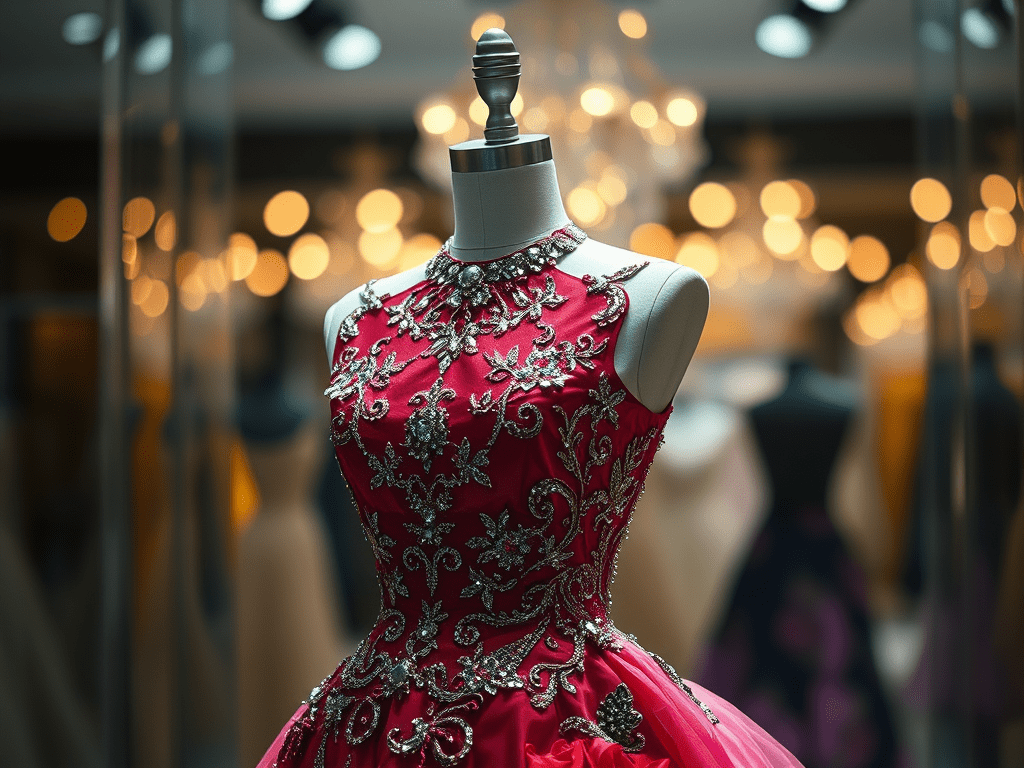
Haute couture represents the pinnacle of fashion design and tailoring. Translating to “high sewing” in French, haute couture encapsulates rare craftsmanship and creativity that produces one-of-a-kind, custom-fitted garments. For over 150 years, it has been an enduring symbol of luxury, extravagance, and aesthetic perfection. The story of haute couture charts both the changing landscape of fashion and the persistent human desire to dream and imagine through clothing.
Haute couture origins are traced to Paris in 1675, but their exact origins have long been debated. It was the time when women dressmakers, the so-called couturières, received exceptional guild rights to produce elaborate wear for upper-class women and children. For the next two hundred years, style icons such as Rose Bertin would lay the foundations for contemporary couture fashion. Bertin, who was nicknamed the “Minister of Fashion,” draped her designs for Marie Antoinette and other aristocrats with embroidered fabric, lace, and even rose petals.
The man who would come to be known as the “father of haute couture,” Englishman Charles Frederick Worth, opened the doors to the first-ever couture house at number 7, rue de la Paix, in 1858. Custom fitted gained ground following that, indicating the high fashion progress into the order creation space. In Worth’s chic salon, sophisticated ladies of society could now order bespoke garments tailored to fit only them.
The haute-couture tradition developed in Paris over the following decades. To protect the interests of couture houses, the Chambre Syndicale de la Haute Couture was established in 1868. Then, in 1908, pioneering designer Paul Poiret pushed modern approaches to style, even using the term “haute couture” for the first time. Among the most notable were Poiret’s Orientalism-inspired creations that shook the Parisian society.
Fashion piracy began to pose existential threats to the viability of couture houses in the early 20th century. The French press, therefore, set up PAIS (L’Association de Protection des Industries Artistiques Saisonnières) in 1921 to safeguard original designs. 1945 marks the next big milestone or turning point after the end of World War II. A series of strict regulations were then enforced under the direction of Lucien Lelong. Ateliers had to produce a collection of at least 35 designs each season to qualify as a couture house. Making bespoke fittings for private customers was also a must.
I. Early Beginnings of Haute Couture
From the opulent court of Louis XVI and Marie Antoinette in the late 1700s to the rise of haute couture. Daring to challenge aristocratic ideals, when Marie Antoinette became Queen she became an arbiter, with avant-garde corsets, sky-high wigs, giant skirts. Her ‘Minister of Fashion’, Rose Bertin, found fabrics, designed dresses, and established the tone for the French haute -republican- court. In liberating the rigid female silhouette, Bertin helped spark a new level of purposeful exuberance in luxurious apparel.
That spirit would endure almost a century later when, in 1858, an Englishman named Charles Frederick Worth relocated to Paris and set up what would be recognized as the first official haute couture house at 7 Rue de la Paix. The named couturier — a person — is an invention of Worth, who made luxury fashion a creative endeavor more often associated with individual designers known for their unique aesthetic. Clients no longer ordered dresses; rather, they were made-to-order and uniquely based on live fittings and consultations. With Worth, Paris became the home of unique and luxurious designs for masters that were going to be known in each kind of genre in innovative fashion for thirty years.
II. Establishment and Recognition of Haute Couture
On November 20, 1868, two seminal events occurred to formally establish haute couture in France. First, leading Parisian fashion houses formed the Chambre Syndicale de la Haute Couture to organize the industry and guard its legacy. This set defined rules and standards to safeguard the uniqueness and quality of haute couture against ready-to-wear imitations.
Second, the French press referenced the term “haute couture” itself for the first time to label Charles Worth’s customized luxury garments. The designation separated true bespoke artistry from ordinary dressmaking. By the early 1900s, the phrase became entrenched to denote model gowns made from the finest fabrics with meticulous fittings and hand-stitching.
In 1908, the Syndicale updated its bylaws, finally stipulating that only French ateliers satisfying strict criteria could qualify as official haute couture houses. This codified haute couture’s production benchmarks, including creating made-to-order designs for private clients, having a workshop (atelier) located in Paris with at least 20 full-time technical staff and presenting collections of at least 35 runs (a single look that is repeated multiple times in different sizes) with both day and evening wear each season.
Seeking even greater protections for original designs, French journalists formed the PAIS agency in 1921 to register croquis (fashion sketches) and help prosecute design pirates. Haute couture’s standards and recognition grew throughout the early 1900s to preserve quality and innovation against copiers.
III. Revival and Prominence After World War II
World War II nearly destroyed haute couture in Europe. Many fashion houses closed, and designers fled Paris during the Nazi occupation. Materials were extremely scarce, stifling creativity. However, revived enthusiasm quickly rebounded after the war ended in 1945. An astonishing 106 couture houses operated in Paris in 1946, though concentration shrank over the coming decades as operating costs climbed.
No revival was more startling than Christian Dior’s legendary “New Look” collection in 1947, which re-established Paris as the apex of glamour. Dior embraced a new optimism and energy to elevate female silhouettes beyond wartime austerity. His exaggerated designs featured nipped waists, stiff petticoats, soft shoulders, and lavish skirts billowing out at mid-calf, ushering in a renewed era of French fashion excitement and femininity.
Over 100 couture houses catered to an exclusive clientele in the post-war 1940s through the 1950s. Yet by 1970, as prêt-à-porter (ready-to-wear) fashion improved and costs of lavish shows mounted, the number of active couture houses in Paris dwindled to just 19. Still, haute couture persisted at the height of luxury craftsmanship and imagination.
IV. Evolution from the 1960s Onward
Haute couture continued breaking new ground in the second half of the 20th century. In 1966, an upstart 32-year-old Yves Saint Laurent opened the first haute couture house to sell ready-to-wear clothing alongside its custom designs, pioneering a new business model. This daring move, along with Saint Laurent’s youthful creativity, cemented him as the industry’s rising star.
The early 2000s recession hit haute couture hard. Between 2002-2012, multiple stalwarts like Versace took hiatuses from showing at Paris Fashion Week, struggling to justify the immense expense of seasonal collections for dwindling clients. Rising in their place came a new wave of audacious young designers like Rad Hourani, who debuted the first unisex haute couture collection in 2013, experimenting with gender fluidity.
In recent decades, strict Syndicale rules have loosened to encourage newcomers. In 2016, Ralph & Russo became the first British brand since the early 1900s to gain haute couture accreditation. Today, only 20 official haute couture houses remain, but their output still garners outsized glory, demonstrating extreme fashion skill and wizardry.
V. Haute Couture Persists Despite Challenges
From Marie Antoinette’s court gowns to today’s catwalk extravaganzas, haute couture has endured by preserving its essence of imagination and artistry. Across centuries, devotees continue valuing the awe and wonder couture evokes through unrivaled fabrics, cuts, details, and craftwork.
Haute couture will likely never regain the prominence or profits of its postwar peak. Yet it thrives by remaining fashion’s most compelling conduit for fantasy and self-expression. For the rare clients who can afford one-of-a-kind visions hand-stitched to their exact contours, haute couture garments transport wearers to spheres of ultimate beauty, identity, and self-confidence.
Though a small and rarefied world, haute couture persists as the most innovative workshop imaginable. Its productions break taboos, push boundaries, and elevate fashion from mundane functionality into stirring art. By sustaining this creative nucleus, haute couture continues pioneering textiles, techniques, silhouettes, and ideas that ultimately trickle down into more accessible ready-to-wear fashion.
Haute couture’s legacy secures Paris as the cultural capital of fashion. Its aura and extravagance lure affluent clients, industry elites, and media to Paris twice a year in breathless anticipation, sparking endless global publicity and commerce. By preserving the vitality and distinction of haute couture against commercialization and practicality, Paris retains its runway supremacy.
For devotees, haute couture’s appeal remains elemental and intimate. Beyond material luxury, haute couture purchases fulfill deeper yearnings for beauty, self-affirmation, and crystallizing identity through the world’s most skillful fashion artworks tailored specifically for a client’s body and tastes. For many successful women and modern trendsetters, much like Marie Antoinette centuries ago, haute couture garments distill the ultimate dream of realizing one’s utmost feminine power, sophistication, and confidence via the mirror’s reflection.
VI. Haute Couture During the Swinging Sixties
The 1960s ushered in a new wave of youth culture, music, and fashion. Haute couture aligned with the era’s shifting mindset by embracing more relaxed silhouettes, brighter colors, and prints inspired by Mod and hippie influences from the streets. Groundbreaking designers like Emilio Pucci and Paco Rabanne created radically new materials and silhouettes for both younger clients and celebrities like Audrey Hepburn, seeking the decade’s modern, liberated energy. Despite the tidal wave of prêt-à-porter looks, haute couture experimented while still upholding luxury craftsmanship during this cultural turning point.
VII. Haute Couture Embraces Celebrity Showstoppers
As expanding media coverage brought haute couture to larger mainstream audiences, designers increasingly courted high-profile celebrities as key ambassadors during the 1970s through the 1990s. Fashion icons like Bianca Jagger, Jerry Hall, and Princess Diana worked closely with houses to create showstopping gowns for red carpets and events. These dazzling one-of-a-kind looks generated tremendous buzz and free publicity. Celebrity collaborations also attracted wealthy clients seeking that same star-quality glamour. This symbiosis gave haute couture added cultural cachet while boosting bottom lines.
VIII. Diffusion Lines Widen Accessibility
Seeking additional revenue, many prestigious couture houses launched “diffusion” lines in the 1980s onward, offering watered-down versions of runway designs at lower price points. Notable examples included Christian Dior’s Dior and Baby Dior, Chanel’s Paris-Biarritz, Yves Saint Laurent’s Rive Gauche, and Givenchy’s Givenchy Jeans Couture. More attainable than pure bespoke couture, these “starter” lines let young fashionistas and less affluent devotees buy into the brand aura. Diffusion extended haute couture’s aspirational lifestyle mystique to wider audiences.
IX. East Meets West: Globalization and New Markets
By the early 2000s, Western couture houses increasingly targeted Asia’s growing nouveau riche and celebrity classes with runway shows and boutique expansions overseas. At the same time, an influx of talented Eastern designers like China’s Guo Pei gained global notoriety, blending European high fashion with Eastern aesthetics. Singapore, Japan, and the United Arab Emirates also emerged as rising couture markets. This bridging opened haute couture to diverse cultural inspirations while diversifying its clientele demographics. No longer solely Eurocentric, 21st-century haute couture continues pushing creative boundaries across borders.
X. Sustainability as Haute Couture’s New Frontier
While excess remains part of haute couture’s DNA, recent years spotlight a countermovement towards sustainable materials and production methods that reduce environmental impacts. Pioneers include Dutch designer Iris Van Herpen, who utilizes recycled plastics, leather alternatives, and 3D printing, along with Stella McCartney and Vivienne Westwood’s vegetable-dyed, non-animal textiles. By showcasing eco materials as equally precious and skillfully worked as conventional cloths, sustainable haute couture redefines luxury craftsmanship for coming generations.
Conclusion:
And haute couture endures, spanning more than 150 years, as not only an industry serving the highest insults but an ever-devout homage to fantasy, the art, and the dreams fashion can still give us. Haute couture still inspires awe and wonder season after season by keeping true to its focus on unmatched quality, materials, and craftsmanship. These rarefied garments, through precise fittings and seamstress magic, realize fantasies to bestow a sense of magic, persona, and confidence to the chosen wearing of each piece. Let us not forget — for the die-hard devotee who can in fact, make the sacrifice necessary to enter this magical sphere, haute couture will still offer an unparalleled means of channeling our most audacious, most whimsically fantasized inner personalities in textiles tailored and sewn to our specific shapes.
 Cuisine & Couture
Leave a comment